


.svg)
.svg)
.svg)
.svg)
.svg)

.svg)
.svg)
.svg)




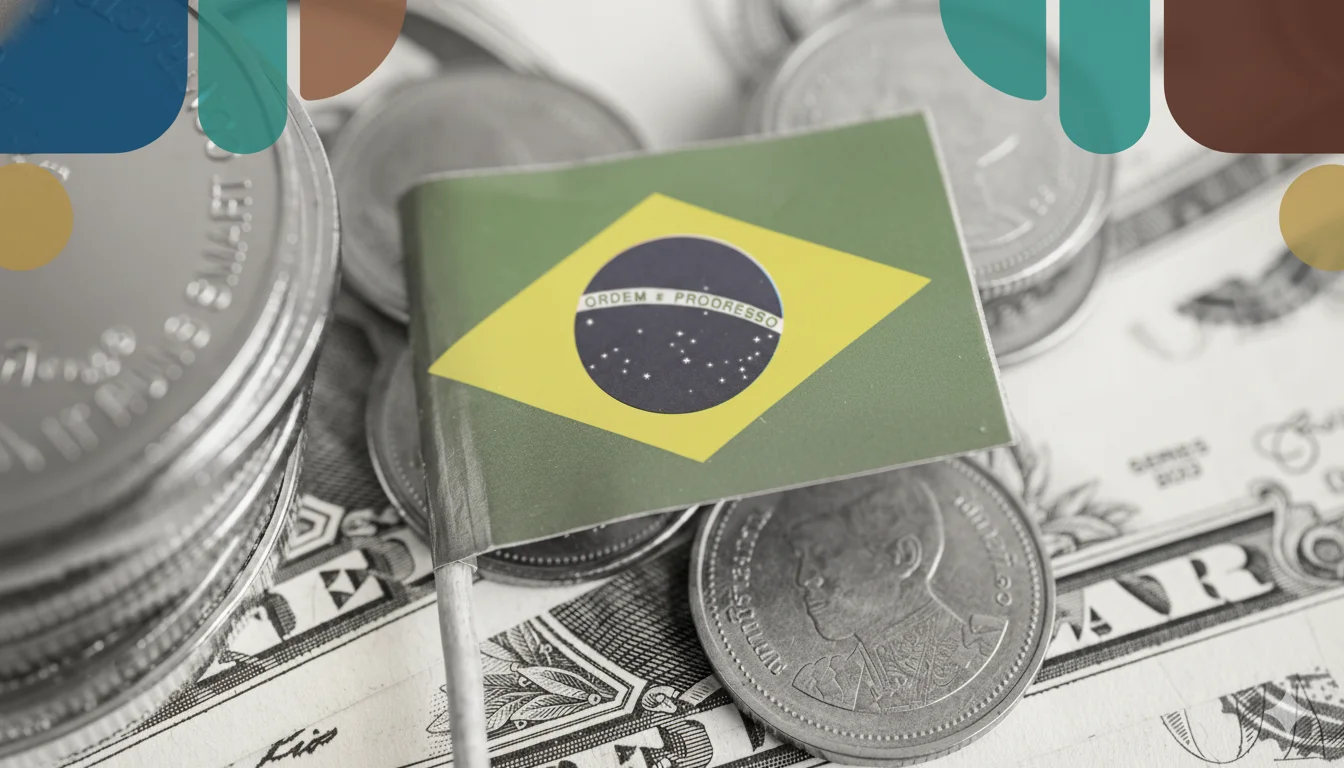



Latin America is no longer an emerging market warming up on the sidelines. It's already in the game, already playing fast, and already rewriting the rules.
This region is home to a digital-first population that adopted mobile commerce, fintech, and alternative payment methods not as experiments, but as necessities. Forecasts suggest the payments ecosystem* in Latin America will exceed USD 300 billion by 2027. That number explains the interest. It does not explain the difficulty.
LATAM offers scale, velocity, and demand. What you’re not going to get is uniformity.
From a distance, the region can look like a single opportunity. Up close, it is thirty-three countries moving at different speeds, under different rules, with different definitions of trust. Internet penetration exceeds 70% across the region, but that access expresses itself in wildly different ways. Payment behavior in São Paulo has little in common with payment behavior in Lima, even when the transaction looks identical on paper.
The shift away from cash has been rapid and irreversible. Mobile phones became wallets. Fintech apps became bank branches. For millions of consumers, digital payments arrived before traditional banking ever did. Yet this leap forward also exposed the limits of card-centric thinking. Credit card penetration varies dramatically, and even where cards are common, many are locked to domestic use.
Success in LATAM depends on understanding the rails people actually use. Real-time bank transfers like Pix in Brazil and SPEI in Mexico. Cash vouchers such as OXXO that turn convenience stores into checkout counters. Digital wallets that function as primary financial identities. These are not edge cases. They’re the operating system.
This guide lays out what it actually takes to expand into Latin America’s five most important markets: Brazil, Mexico, Argentina, Chile, and Peru. Each market rewards preparation, but the markets will also penalize assumptions. Let’s get you situated properly.
*Payments ecosystem=eCommerce+POS
The assumptions that break first in Latin America
Most failed expansions in LATAM do not collapse because demand was misread. They collapse because imported assumptions quietly give way under local pressure.
The first assumption is that cards are the universal baseline. In much of Latin America, they are not. They are one option among many, and often not the most used one.
The second assumption is that one gateway simplifies everything. In practice, a single provider almost always produces uneven results. Authorization rates vary by country, issuer behavior shifts unexpectedly, and what performs well in one market quietly underperforms in another.
The third assumption is that fraud behaves consistently across borders. Local banks in LATAM often deploy aggressive risk controls that favor caution over conversion, creating high false-decline rates that frustrate both merchants and customers.
The fourth assumption is that installments are a feature you can add later. In LATAM, installments are a language. Each market speaks it differently, and misunderstanding it is costly.
The fifth assumption is that compliance stays backstage. In Latin America, tax rules, data residency requirements, and consumer protection laws frequently walk onto the checkout page and take a seat.
This guide exists to dismantle those assumptions before they dismantle your expansion plans.
Brazil: The Engine of Latin American Commerce
A digital powerhouse with its own gravity
Brazil is the gravitational center of Latin American commerce. With a population of more than 210 million people, it accounts for a disproportionate share of the region’s e-commerce volume.
It’s also one of the most digitally engaged consumer markets in the world. A full 61% of Brazilian shoppers report using a mobile phone for their most recent retail purchase, outpacing adoption in the United States and the United Kingdom.
Brazil didn’t digitize cautiously. It digitized decisively and merchants and consumers alike reaped the rewards almost immediately.
Pix didn’t disrupt payments, it replaced the baseline
Pix isn’t just another payment method in Brazil. It’s the default.
Launched by Brazil’s central bank in 2020, Pix enables instant, account-to-account transfers around the clock. Adoption didn’t follow the usual curve. It surged by unprecedented levels. By 2024, Pix transaction volumes exceeded combined credit and debit card volumes by roughly 80%.
For merchants, the appeal is obvious. Fees are low. Conversion rates are high. Settlement is immediate. What matters more, though, is how Pix reshaped consumer expectations. Confirmation is instant. Refunds are expected to be fast. Waiting feels unnecessary.
It all makes for a very fertile field for merchants.
Pix Automático pushes this shift further. By enabling recurring payments directly from bank accounts, it opens subscription and SaaS models to tens of millions of Brazilians who have smartphones and bank access, but no credit cards. This isn’t an incremental improvement, it’s a structural change in how recurring revenue works in Brazil.
Cards, installments, and why old habits still matter
Credit cards remain essential for high-ticket purchases, largely because of Parcelado, Brazil’s deeply ingrained installment culture. More than 60% of card transactions are paid in installments, typically spread over three to twelve months without interest.
Installments are not a conversion tactic here. They are a purchasing expectation.
Boleto Bancário still exists as a fallback for consumers who prefer the perceived safety of offline payment, but its relevance is fading as Pix continues to absorb everyday use cases.
Where friction actually shows up
Brazilian consumers don’t seem to be altogether all that hesitant when it comes to making payments. When they want something, they buy it.
Payments friction in Brazil lives elsewhere, somewhere near the border.
Somewhere around 70% of credit cards issued in Brazil are domestic-only. They can’t process foreign currencies or route through international acquirers. Merchants relying solely on international processing routinely see decline rates up to 20% higher than the ones who are using local routing.
Local card schemes such as Elo and Hipercard further complicate the landscape. They hold meaningful market share and often sit awkwardly alongside global gateway configurations.
You’ll find that trust is also local in Brazil. Familiar logos, expected installment displays, and recognizable flows signal legitimacy. When those cues are missing, abandonment rises even if payment methods are technically available.
Regulation, taxes, and the cost of operating at scale
Brazil’s regulatory complexity is legendary for a reason. There's even a name for what it costs to do business in Brazil: Custo Brasil.
Merchants must comply with LGPD, Brazil’s data protection law, while navigating a layered tax environment that includes IOF on cross-border transactions, state-level ICMS, and municipal ISS taxes. Processing domestic payments typically requires either a local legal entity or a Merchant of Record, each with distinct trade-offs.
Brazil rewards scale, but it charges rent for it.
Why the opportunity still dwarfs the effort
Brazil remains one of the most attractive digital markets in the world.
Pix Automático unlocks subscription revenue at scale. Regulated iGaming is expanding rapidly, with Pix favored for instant deposits and payouts. Retailers selling high-value goods will need to treat installments as mandatory infrastructure.
If you plan to operate seriously in Brazil, surface-level integration is not enough. The Brazil white paper explores local routing, recurring revenue mechanics, and regulatory strategy in greater operational detail.
Download the Payments in Brazil White Paper Here
Mexico: The Cash-Digital Hybrid
Two economies sharing one checkout
Mexico is Latin America’s second-largest economy and one of its most complex payment environments. With nearly 130 million people and strong mobile adoption, e-commerce is projected to reach $168B by 2028.
Mexico moves fast and slow at the same time.
Advanced fintech products coexist with a deeply entrenched cash economy. Any strategy that favors one side exclusively leaves meaningful revenue behind.
OXXO, SPEI, and parallel realities
OXXO remains essential. It allows consumers to initiate purchases online and complete them in cash at more than twenty thousand convenience stores. For millions of unbanked consumers, OXXO is not a workaround. It is the system.
SPEI represents the digital counterweight. Mexico’s real-time interbank transfer system enables instant payments and is actively promoted as a way to reduce cash reliance.
Cards sit between these worlds. Widely used by banked consumers, they rely heavily on meses sin intereses (installment payments with no interest) to drive conversion in retail and travel.
Where friction hides in plain sight
Fraud is a persistent concern in Mexico, and banks respond with aggressive filters that produce high false-decline rates. Conversion suffers accordingly.
Less visible is the operational drag introduced by cash vouchers. Inventory is often reserved the moment an OXXO voucher is generated, even though payment may never occur. This creates phantom demand, distorts forecasting, and ties up stock for days.
At scale, this inventory-hold effect becomes a material operational cost. It rarely appears in conversion dashboards, but it shows up quickly in fulfillment and finance meetings.
Regulation with real enforcement
Mexico’s Digital VAT requires foreign digital service providers to register and remit IVA. Non-compliance risks being blocked by local internet providers.
The Fintech Law adds another layer of oversight, stabilizing consumer trust while raising the bar for operational readiness.
Why Mexico remains strategically critical
Travel and hospitality benefit heavily from installment support. Cross-border commerce remains strong, particularly with U.S. merchants. Wallets and neobanks continue to gain traction among unbanked populations.
The Mexico white paper dives deeper into fraud dynamics, voucher economics, and operational trade-offs.
Download the Payments in Mexico White Paper here.
Argentina: The Resilient Innovator
Digital sophistication on a moving sidewalk
Argentina is the market that breaks neat spreadsheets.
It’s economically volatile, politically unpredictable, and structurally constrained in ways that make finance teams nervous. And yet, it is one of the most digitally sophisticated payments markets in Latin America. Ecommerce adoption is high. Wallet usage is pervasive. Consumers are fluent in financial workarounds in a way that borders on professional. If they want something, they’ll find a way to get it.
Expansion into Argentina doesn’t fail because people won’t pay. It fails when systems assume stability that doesn’t exist.
Wallets, QR codes, and living without patience for inflation
Mercado Pago dominates Argentina’s payment landscape, operating less like a wallet and more like a financial operating system. QR code payments are everywhere, from taxis to street vendors, supported by the central bank’s Transferencias 3.0 initiative, which mandates interoperability between banks and wallets.
Credit cards still matter, but inflation has changed how they are used. Installments are not about convenience here. They are about price certainty. Paying over time allows consumers to lock in value before prices rise again.
Cash voucher networks such as Rapipago and Pago Fácil remain relevant, but their role continues to shrink as digital options feel safer, faster, and more flexible.
Volatility as a design constraint, not a footnote
The defining challenge in Argentina is currency volatility. The Argentine Peso doesn’t seem to drift so much as it lurches.
For international merchants, this creates a cascade of design problems. Pricing becomes a UX decision. Settlement timing becomes a risk decision. Reconciliation becomes a guessing game played across multiple exchange rates, some official, some implied, some temporary.
In Argentina, payments infrastructure is going to need to be resilient enough to operate while the ground shifts underneath it.
Regulation and taxation under constant adjustment
Argentina’s tax environment adds another layer of complexity. Provincial taxes such as Ingresos Brutos vary by jurisdiction and are frequently withheld at the source by processors. This shifts tax calculation and compliance into the payment flow itself.
Foreign exchange controls further limit how and when funds can move out of the country. For many merchants, compliance is less about checking boxes and more about staying continuously aligned with a moving regulatory target.
Where opportunity still breaks through
Argentina’s economic reality has made its consumers inventive.
Crypto and stablecoins are widely used as stores of value, with adoption rates among the highest in the world. Accepting stablecoins is less of a novelty here (like it might be elsewhere) than a high-trust signal.
Digital goods perform well. Software, gaming, education, and subscription services can scale if they integrate with local wallets and account for FX realities.
Argentina rewards merchants who design for instability instead of pretending it is temporary.
If you are serious about operating in Argentina, the mechanics matter. The full country white paper goes deeper into FX exposure, wallet integration, and regulatory survival tactics.
Download it here.
Chile: The Most Predictable Market With a Catch
Stability with expectations attached
Chile is often described as the most mature payments market in Latin America, and the label fits. Internet penetration sits at somewhere around 95%. Financial inclusion is high. Regulatory frameworks are clear and consistently enforced.
For merchants entering LATAM for the first time, Chile can feel reassuring. It looks familiar. It behaves rationally. It rarely surprises you.
Right up until you meet the installment expectations.
Cards still rule, but wallets are catching up
Chile has the highest card penetration in the region. Debit and credit payments flow primarily through Redcompra and Webpay Plus, the historically dominant gateway infrastructure.
Cards work. Approval rates are strong. Consumers are comfortable transacting online.
At the same time, digital wallets such as MACH and Mercado Pago are gaining ground, particularly for in-person payments and peer-to-peer transfers. Wallet adoption is projected to account for nearly a quarter of in-person transactions by the end of the decade.
Chile isn’t abandoning cards, but rather it’s layering convenience on top of them.
Installments as a cultural norm, not a feature
The primary friction point in Chile isn’t access, it’s expectation.
Chilean consumers routinely expect long installment plans, sometimes extending up to forty-eight months for high-value purchases. This isn’t considered aggressive financing, either. It’s very much considered to be the norm.
For merchants, these extended installment horizons affect more than conversion. They influence cash flow forecasting, refund policies, chargeback exposure, and reconciliation timelines. Selling high-ticket items in Chile without long-term installment support is like opening a restaurant without chairs. You can do it, you just probably won’t get much business.
Regulation that works exactly as written
Chile’s regulatory environment might be a bit strict, but it’s also very transparent. VAT applies to digital services sold by foreign merchants, and payment processors often act as withholding agents. Consumer protection laws are enforced consistently, particularly around refunds and cross-border purchases.
The upside is predictability. The downside is that shortcuts rarely go unnoticed and merchants really need to be on top of their regulatory game.
Why Chile still matters strategically
Chile is an excellent market for high-end retail, electronics, and luxury goods, where high credit limits and installment comfort drive conversion.
It is also a growing hub for B2B commerce, with enterprises increasingly shifting procurement and invoicing to digital rails.
Chile proves that stability does not mean simplicity. It means expectations are clearer, and failing to meet them is less forgivable.
The Chile white paper explores installment structures, settlement implications, and gateway strategy in more operational detail.
Download it here.
Peru: The Market Moving Faster Than Its Reputation
From cash-heavy to mobile-first in one generation
Peru is one of the fastest-growing e-commerce markets in Latin America, driven by a young population and widespread smartphone adoption. Historically cash-dominant, the pandemic accelerated a digital shift that never reversed.
Peru did not gradually modernize its payments ecosystem so much as it leapt from one situation to the next. .
A2A payments become the default
Apps/Digital Wallets like Yape and PLIN have transformed how Peruvians move money. These account-to-account payment systems are interoperable, fast, and deeply trusted. For millions of users, they are the primary way to pay, send, and receive funds. They’re also being used to recharge public transportation cards.
Credit cards still exist, but frequency tells the real story. A2A payments are used more often, in more places, with fewer hesitations.
For unbanked consumers, PagoEfectivo remains a critical bridge, allowing online purchases to be completed through bank transfers or physical agents. It plays a similar role to OXXO, but with faster confirmation loops.
Where friction still slows things down
Despite rapid adoption, financial inclusion gaps remain. Cash vouchers are still necessary for full market reach. Transaction verification can be slower than card-based flows, particularly outside major cities.
Logistics challenges persist for physical goods, especially in rural regions. Payments may succeed long before fulfillment becomes predictable.
Regulation catching up to behavior
Peru’s tax authority, SUNAT, is increasing oversight on digital commerce. Foreign merchants must comply with evolving digital tax frameworks and strict consumer protection rules, particularly around refunds and cancellations.
The regulatory environment is tightening, but it is doing so in response to real usage, not theoretical policy.
Why Peru is a signal market
Peru shows what happens when trust shifts from banks to apps faster than regulation can keep up. It is a preview of how A2A-first markets may evolve elsewhere in the region.
Marketplaces, aggregators, and mobile gaming platforms perform especially well here, benefiting from low barriers to entry and high transaction frequency.
What Enterprise Merchants Actually Need to Internalize About Latin America
Expanding into Latin America is not a copy-and-paste exercise. It is closer to learning five dialects of the same language while the grammar keeps changing.
Strategies that work in North America or Europe often assume a stable baseline: cards everywhere, predictable approval logic, uniform compliance. In LATAM, those assumptions collapse quickly.
Enterprise merchants who succeed in the region tend to internalize four realities.
Payments orchestration is not optional infrastructure
No single gateway performs best across all LATAM markets. A provider that excels in Brazil may underperform in Mexico. A setup optimized for cards may fail when A2A becomes dominant.
Payments orchestration allows merchants to route transactions dynamically, adapt to local failure points, and treat payments as a system instead of a pipe. It turns rigid payment stacks into adaptive ones.
The unanswered question is not whether orchestration helps. It is what happens when orchestration logic itself becomes a point of failure.
Unbanked revenue is not a niche
In LATAM, unbanked (or underserved) consumers are not an edge case. They are often the majority.
Pix users in Brazil. OXXO users in Mexico. Wallet-first consumers in Argentina. A2A-native users in Peru. These are mainstream behaviors.
Ignoring them caps growth before it starts. Designing for them changes how success is measured.
Vaulting and tokenization define continuity
Recurring revenue in LATAM is fragile. Cards expire. Fraud rules shift. Issuers decline aggressively.
A standalone, provider-agnostic vault allows merchants to maintain continuity across processors, update credentials automatically, and route transactions based on real performance instead of legacy commitments.
The deeper question is ownership. Who controls customer continuity when providers change?
Entity versus Merchant of Record is a strategic trade-off
Establishing local entities delivers higher approval rates and lower fees, but it comes with regulatory gravity. Merchant of Record models reduce operational burden and speed up entry, often at a higher per-transaction cost.
There is no universally correct answer. There is only alignment with your risk tolerance, growth timeline, and internal capacity.
Latin America represents a $300B opportunity. Capturing it requires treating payments not as background utilities, but as strategic, localized systems designed for how people actually pay.
This guide is the starting point. The country-specific white papers go deeper into execution, trade-offs, and operational detail for teams ready to move from interest to action. Make sure to read each to understand the intricacies of each of these accessible and profitable markets.

What payment methods do you need to accept in Latin America?

Cards alone will not cover the region. Brazil runs on Pix, Mexico splits between OXXO cash vouchers and SPEI transfers, Argentina leans on wallets like Mercado Pago, and Peru has moved to A2A apps like Yape and PLIN. Local methods are the default, not the fallback.
Why are card decline rates so high for merchants selling into LATAM?
Around 70% of credit cards issued in Brazil are domestic-only and cannot route through international acquirers. Local banks also run aggressive fraud filters that produce false declines. Merchants processing everything internationally can see decline rates up to 20% higher than those using local routing.
Do you need a local entity to process payments in Latin America, or can you use a Merchant of Record?
Both work, with different costs. A local entity delivers higher approval rates and lower per-transaction fees, but brings tax registration, data residency, and ongoing compliance obligations. A Merchant of Record gets you live faster and absorbs that burden, usually at a higher rate per transaction.
Written by
Andy McHale is a former Senior Director of Product and Market Strategy at Spreedly, where he focused on helping organizations design, scale, and adapt modern payment ecosystems. His work centered on payments orchestration, fraud and risk strategy, alternative and emerging payment methods, and the evolving relationship between payments, data, and platform architecture.
During his time at Spreedly, Andy helped shape industry perspectives on open payments, recurring revenue optimization, and the strategic role of orchestration in enabling flexible payment stacks. He worked across product, strategy, and go-to-market teams to translate complex payment infrastructure into clear, practical direction for merchants, platforms, and payments leaders operating at scale.
Andy writes about payments innovation, fraud prevention, open banking, digital wallets, and payment architecture strategy, with a focus on helping organizations improve performance, expand capabilities, and navigate an increasingly complex global commerce landscape.
H5 Title
Nisl aenean link in text aliquet risus elit dictumst non nulla ullamcorper. Eu euismod senectus tristique laoreet vel accumsan purus. Lectus ac ante amet risus ut sed blandit sollicitudin cras. Sagittis cursus at purus amet pellentesque sit risus.



H5 Title
Nisl aenean link in text aliquet risus elit dictumst non nulla ullamcorper. Eu euismod senectus tristique laoreet vel accumsan purus. Lectus ac ante amet risus ut sed blandit sollicitudin cras. Sagittis cursus at purus amet pellentesque sit risus.
We help merchants, merchant aggregators, and fintechs scale with speed & confidence.
We help merchants, merchant aggregators, and fintechs scale with speed & confidence.
We help merchants, merchant aggregators, and fintechs scale with speed & confidence.
We help merchants, merchant aggregators, and fintechs scale with speed & confidence.
1 in 4 executives reported losing over $1M annually at checkout. Find out what's driving cart abandonment and how to fix it. Learn more about:

Navigating AI Risk
Building Resilience for Global Scale
Experience how the Spreedly platform can orchestrate and optimize your payments stack.
140+ Payment Integrations
Managed Payment Vault
You'll find everything you need to know about Payments Orchestration in this detailed guide. Find out what you should be looking for, what you'll need to get started, and how to implement changes at every stage.
H3 Title
Nisl aenean link in text aliquet risus elit dictumst non nulla ullamcorper. Eu euismod senectus tristique laoreet vel accumsan purus. Lectus ac ante amet risus ut sed blandit sollicitudin cras. Sagittis cursus at purus amet pellentesque sit risus.
Written by