
Get Ready for the Future! Download the State of Checkout 2025 White Paper Today
Platform

Product & Solutions

Learn more about the only open payments platform built for global commerce

Pricing

Solutions

Open Payments Connectivity
Payment Token Ownership & Portability
Intelligent Payment Optimization
Fraud Prevention & Authentication
Operational Agility & Simplicity
Centralized Management & Reporting

Platform Pillars

Connect

The unified orchestration layer for wallets and alternative payments

Vault

The secure repository for all your payment methods

Optimize

Workflow-driven payments intelligence for smarter routing and higher auth rates

Protect

A flexible fraud and authentication layer. Instantly add advanced fraud tools and 3DS

Agentic

One integration to sell inside ChatGPT, Gemini, and every agentic platform

Composer

The visual workflow builder that ties fraud, identity, and payment routing together in one place

View How Spreedly

Connects to your favorite payment methods
Optimizes your revenue
Protects your data
Reduces fraud
View the Demo
Resources

The Open Payments Library

Take a look at all of our resources and get the information you need to grow your business

View all Resources

Featured resources

The State of Checkout 2026
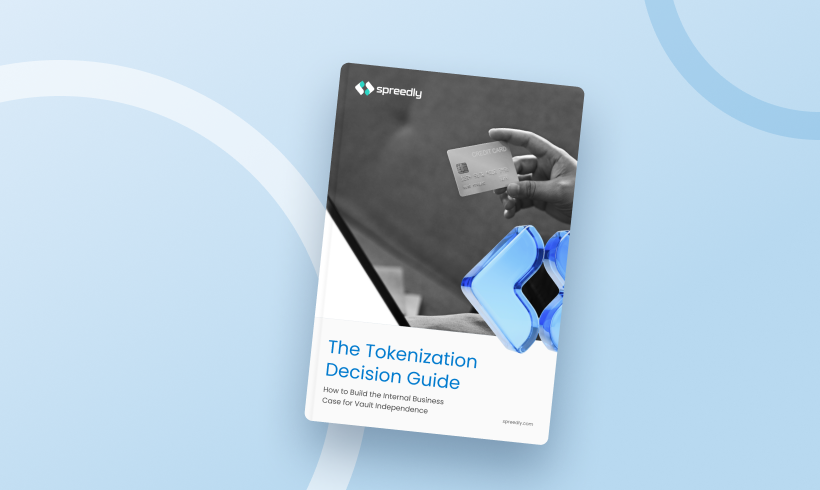
The Tokenization Decision Guide
Own the Tokens, Own the Agentic Commerce Customer

Introducing Composer: Fraud and Payment Orchestration on One Canvas

Read More
Company

Support Portal

Spreedly Support
Trust Center
Platform Status

Developer Portal

Developer Guides
Documentation
Parter Integrations

Partners & Integrations

Integrations Ecosystem
Our Partners

Latest Partner News

Paysafe Unveils Strategic Partnership with Spreedly

Featured Partner

PayPal
Product & Solutions

Product & Solutions

Learn more about the only open payments platform built for global commerce

Pricing

Solutions

Open Payments Connectivity
Payment Token Ownership & Portability
Intelligent Payment Optimization
Fraud Prevention & Authentication
Operational Agility & Simplicity
Centralized Management & Reporting

Platform Pillars

Connect

The unified orchestration layer for wallets and alternative payments

Vault

The secure repository for all your payment methods

Optimize

Workflow-driven payments intelligence for smarter routing and higher auth rates

Protect

A flexible fraud and authentication layer. Instantly add advanced fraud tools and 3DS

Agentic

One integration to sell inside ChatGPT, Gemini, and every agentic platform

Composer

The visual workflow builder that ties fraud, identity, and payment routing together in one place

View How Spreedly

Connects to your favorite payment methods
Optimizes your revenue
Protects your data
Reduces fraud
View the Demo
Pricing
Resources

The Open Payments Library

Take a look at all of our resources and get the information you need to grow your business

View all Resources

Featured resources

The State of Checkout 2026
The Tokenization Decision Guide
Own the Tokens, Own the Agentic Commerce Customer

Introducing Composer: Fraud and Payment Orchestration on One Canvas

Read More
Developers

Support Portal

Spreedly Support
Trust Center
Platform Status

Developer Portal

Developer Guides
Documentation
Integrations

Partners & Integrations

Integrations Ecosystem
Our Partners

Latest Partner News

Paysafe Unveils Strategic Partnership with Spreedly

Featured Partner

PayPal
Company

Company

About
Leadership
Careers
Contact Us
News
Pricing
Log In
See a Demo
Log In
See a Demo

Product & Solutions

Learn more about the only open payments platform built for global commerce

Pricing

Solutions

Open Payments Connectivity
Payment Token Ownership & Portability
Intelligent Payment Optimization
Fraud Prevention & Authentication
Operational Agility & Simplicity
Centralized Management & Reporting

Platform Pillars

Connect

The unified orchestration layer for wallets and alternative payments

Vault

The secure repository for all your payment methods

Optimize

Workflow-driven payments intelligence for smarter routing and higher auth rates

Protect

A flexible fraud and authentication layer. Instantly add advanced fraud tools and 3DS

Agentic

One integration to sell inside ChatGPT, Gemini, and every agentic platform

Composer

The visual workflow builder that ties fraud, identity, and payment routing together in one place

View How Spreedly

Connects to your favorite payment methods
Optimizes your revenue
Protects your data
Reduces fraud
View the Demo
Platform

Product & Solutions

Learn more about the only open payments platform built for global commerce

Pricing

Solutions

Open Payments Connectivity
Payment Token Ownership & Portability
Intelligent Payment Optimization
Fraud Prevention & Authentication
Operational Agility & Simplicity
Centralized Management & Reporting

Platform Pillars

Connect

The unified orchestration layer for wallets and alternative payments

Vault

The secure repository for all your payment methods

Optimize

Workflow-driven payments intelligence for smarter routing and higher auth rates

Protect

A flexible fraud and authentication layer. Instantly add advanced fraud tools and 3DS

Agentic

One integration to sell inside ChatGPT, Gemini, and every agentic platform

Composer

The visual workflow builder that ties fraud, identity, and payment routing together in one place
View How Spreedly

Connects to your favorite payment methods
Optimizes your revenue
Protects your data
Reduces fraud
View the Demo
Use Cases
Resources

The Open Payments Library

Take a look at all of our resources and get the information you need to grow your business

View all Resources

Featured resources

The State of Checkout 2026
The Tokenization Decision Guide
Own the Tokens, Own the Agentic Commerce Customer

Introducing Composer: Fraud and Payment Orchestration on One Canvas

Read More
Company

Support Portal

Spreedly Support
Trust Center
Platform Status

Developer Portal

Developer Guides
Documentation
Blog
Platform

Product & Solutions

Learn more about the only open payments platform built for global commerce

Pricing

Solutions

Open Payments Connectivity
Payment Token Ownership & Portability
Intelligent Payment Optimization
Fraud Prevention & Authentication
Operational Agility & Simplicity
Centralized Management & Reporting

Platform Pillars

Connect

The unified orchestration layer for wallets and alternative payments

Vault

The secure repository for all your payment methods

Optimize

Workflow-driven payments intelligence for smarter routing and higher auth rates

Protect

A flexible fraud and authentication layer. Instantly add advanced fraud tools and 3DS

Agentic

One integration to sell inside ChatGPT, Gemini, and every agentic platform

Composer

The visual workflow builder that ties fraud, identity, and payment routing together in one place
View How Spreedly

Connects to your favorite payment methods
Optimizes your revenue
Protects your data
Reduces fraud
View the Demo
Use Cases
Resources

The Open Payments Library

Take a look at all of our resources and get the information you need to grow your business

View all Resources

Featured resources

The State of Checkout 2026
The Tokenization Decision Guide
Own the Tokens, Own the Agentic Commerce Customer

Introducing Composer: Fraud and Payment Orchestration on One Canvas

Read More
Company

Support Portal

Spreedly Support
Trust Center
Platform Status

Developer Portal

Developer Guides
Documentation
Blog
Log In
See Demo

Product & Solutions

Learn more about the only open payments platform built for global commerce

Pricing

Solutions

Open Payments Connectivity
Payment Token Ownership & Portability
Intelligent Payment Optimization
Fraud Prevention & Authentication
Operational Agility & Simplicity
Centralized Management & Reporting

Platform Pillars

Connect

The unified orchestration layer for wallets and alternative payments

Vault

The secure repository for all your payment methods

Optimize

Workflow-driven payments intelligence for smarter routing and higher auth rates

Protect

A flexible fraud and authentication layer. Instantly add advanced fraud tools and 3DS

Agentic

One integration to sell inside ChatGPT, Gemini, and every agentic platform

Composer

The visual workflow builder that ties fraud, identity, and payment routing together in one place

View How Spreedly

Connects to your favorite payment methods
Optimizes your revenue
Protects your data
Reduces fraud
View the Demo

Spreedly Payments Glossary

Clear, practical definitions of the terms that shape modern payments β€” from acquirers and interchange to tokenization and orchestration.
A–Z
Z–A
Thank you! Your submission has been received!
Oops! Something went wrong while submitting the form.

Refund

A refund is a merchant-initiated credit that returns funds to a cardholder after a completed settlement, processed back through the card network.

Learn more β†’

Void

A void cancels an authorization before settlement, releasing the cardholder's fund hold without any money changing hands between the parties involved.

Learn more β†’

Settlement

Settlement transfers captured transaction funds from the issuing bank through the card network and acquirer into the merchant's bank account.

Learn more β†’

Capture

Capture instructs the acquirer to collect authorized funds and include them in settlement, converting an authorization hold into a confirmed charge.

Learn more β†’

Authorization

Authorization is the real-time issuer approval of a payment transaction, confirming funds are available and reserving them for subsequent capture.

Learn more β†’

Chargeback Representment

Chargeback representment submits evidence to the issuing bank to challenge a chargeback and recover the merchant's funds through the card network process.

Learn more β†’

Sanctions Screening

Sanctions screening checks customers and transactions against government watchlists to prevent processing payments for designated individuals or entities.

Learn more β†’

Machine Learning Fraud Detection

Machine learning fraud detection uses algorithms trained on transaction data to detect fraud patterns and adapt to new threats without manual rule updates.

Learn more β†’

False Positive (fraud context)

A false positive is a legitimate transaction incorrectly blocked by a fraud rule, creating revenue loss and a poor experience for genuine customers.

Learn more β†’

Liability Shift (3DS / fraud context)

Liability shift moves chargeback responsibility for fraud from the merchant to the issuer when the transaction was authenticated through 3D Secure.

Learn more β†’

Exemption Management (SCA context)

Exemption management applies SCA exemptions to eligible low-risk transactions, reducing authentication friction while maintaining full PSD2 compliance.

Learn more β†’

Transaction Monitoring

Transaction monitoring analyzes payment activity in real time to detect suspicious patterns indicating fraud, money laundering, or compliance violations.

Learn more β†’

Device Fingerprinting

Device fingerprinting creates a unique identifier from browser and device attributes to detect suspicious patterns and link activity to fraud signals.

Learn more β†’

Velocity Checks

Velocity checks flag transactions exceeding defined frequency or volume thresholds within a time window, identifying potential fraud or account takeover.

Learn more β†’

Fraud Orchestration

Fraud orchestration coordinates fraud prevention tools across the payment flow, routing transactions through the right checks at each step to cut losses.

Learn more β†’

Dispute Management

Dispute management tracks and responds to chargebacks with evidence, protecting merchant revenue and maintaining card network standing and ratios.

Learn more β†’

CP (Card-Present) Transaction

A card-present transaction reads the physical card at a terminal via chip or tap, providing stronger authentication and lower fraud liability.

Learn more β†’

CNP (Card-Not-Present) Transaction

A CNP transaction is processed without the physical card, typical in e-commerce, and carries higher fraud risk and interchange costs than card-present.

Learn more β†’

Friendly Fraud

Friendly fraud occurs when a cardholder disputes a legitimate purchase with their bank to obtain a refund while keeping the goods or services received.

Learn more β†’

Chargeback Ratio

Chargeback ratio is the percentage of transactions resulting in chargebacks, monitored by card networks against thresholds typically around 1% per month.

Learn more β†’

Chargeback

A chargeback is a forced reversal initiated by a cardholder's bank after a disputed payment, debiting the merchant and returning funds to the customer.

Learn more β†’

Risk-Based Authentication (RBA)

Risk-Based Authentication adjusts verification requirements based on a transaction's calculated fraud risk score and the surrounding contextual signals.

Learn more β†’

Fraud Scoring

Fraud scoring assigns a risk score to each transaction using device, behavioral, and historical signals to identify likely fraud before a card is charged.

Learn more β†’

CVV / CVC (Card Verification Value / Code)

CVV/CVC is the 3 or 4 digit card security code that verifies physical card possession in online transactions and cannot be stored after authorization.

Learn more β†’

AVS (Address Verification Service)

AVS checks whether the billing address in a card payment matches the issuing bank's records, used as a fraud signal in card-not-present transactions.

Learn more β†’

Step-Up Authentication

Step-up authentication presents a challenge when a 3DS2 risk assessment returns a high score, protecting merchants against potentially fraudulent payments.

Learn more β†’

Frictionless Authentication

Frictionless authentication is a 3DS2 outcome where the issuer approves the transaction using background data with no visible challenge shown to the buyer.

Learn more β†’

PSD2 (Payment Services Directive 2)

PSD2 opened EU banking APIs to licensed third parties, mandated Strong Customer Authentication for online payments, and created the open banking framework.

Learn more β†’

Strong Customer Authentication (SCA)

SCA is PSD2's two-factor verification requirement for European online payments, using two of three factors: something known, owned, or biometric.

Learn more β†’

3DS2 / EMV 3-D Secure

3DS2 is the modern 3D Secure version enabling frictionless authentication using behavioral data, with a cardholder challenge only when risk is elevated.

Learn more β†’

3D Secure (3DS)

3D Secure (3DS) authenticates cardholders online, reducing fraud and shifting chargeback liability to the issuer for authenticated card transactions.

Learn more β†’

Politically Exposed Person (PEP)

A PEP (Politically Exposed Person) holds a prominent public role whose financial activity carries elevated money laundering risk under AML regulations.

Learn more β†’

Multi-Factor Authentication (MFA)

Multi-Factor Authentication (MFA) requires two or more independent verification factors before granting access to a payment system or sensitive account.

Learn more β†’

Approved Scanning Vendor (ASV)

An ASV (Approved Scanning Vendor) is PCI SSC-certified to conduct external vulnerability scans required as part of a merchant's PCI DSS compliance program.

Learn more β†’

De-scoping

De-scoping removes systems from PCI DSS compliance scope by ensuring they never contact cardholder data, achieved through tokenization or P2PE solutions.

Learn more β†’

Penetration Testing (Pen Test)

Penetration testing is a simulated cyberattack on a payment system to find exploitable vulnerabilities before real attackers can discover and use them.

Learn more β†’

Data Residency

Data residency requirements specify which country or region payment data must be stored in, driven by national data protection or sovereignty regulations.

Learn more β†’

GDPR (General Data Protection Regulation)

GDPR requires organizations to lawfully collect, protect, and grant individuals rights over their personal data, including payment and transaction records.

Learn more β†’

KYB (Know Your Business)

KYB (Know Your Business) verifies a business entity's identity, ownership structure, and legitimacy before onboarding it as a merchant or payment partner.

Learn more β†’

KYC (Know Your Customer)

KYC (Know Your Customer) verifies a customer's identity at onboarding using official documentation to prevent fraud and meet AML compliance requirements.

Learn more β†’

AML (Anti-Money Laundering)

AML refers to laws and procedures that prevent criminals from disguising illegally obtained funds as legitimate income through the financial system.

Learn more β†’

ROC (Report on Compliance)

A ROC (Report on Compliance) is the formal PCI DSS audit document a QSA completes for Level 1 merchants, recording all assessment findings and outcomes.

Learn more β†’

AOC (Attestation of Compliance)

An AOC (Attestation of Compliance) is the signed document confirming a merchant's or service provider's PCI DSS assessment results and compliance status.

Learn more β†’

SAQ (Self-Assessment Questionnaire)

An SAQ (Self-Assessment Questionnaire) is the PCI DSS validation tool for merchants who qualify to self-certify rather than undergo a full QSA audit.

Learn more β†’

QSA (Qualified Security Assessor)

A QSA (Qualified Security Assessor) is a PCI SSC-certified organization that conducts formal PCI DSS audits for merchants and service providers.

Learn more β†’

Cardholder Data Environment (CDE)

The CDE is the network segment containing systems that store, process, or transmit cardholder data, placing those systems in scope for PCI DSS compliance.

Learn more β†’

Primary Account Number (PAN)

The PAN is the 14-19 digit card number identifying a cardholder's account and is the primary data element PCI DSS was designed to protect.

Learn more β†’

Sensitive Authentication Data (SAD)

Sensitive Authentication Data includes CVV codes, PIN blocks, and full magnetic stripe data that card network rules prohibit storing after authorization.

Learn more β†’

Point-to-Point Encryption (P2PE)

P2PE encrypts cardholder data at the point of interaction and decrypts it only inside a validated secure environment, reducing PCI scope for merchants.

Learn more β†’

End-to-End Encryption (E2EE)

End-to-end encryption protects payment data from the capture point through to the processor, with no readable cardholder data accessible between them.

Learn more β†’

Encryption

Encryption converts payment data into unreadable ciphertext, protecting it from unauthorized access during transmission and at rest in storage systems.

Learn more β†’

Tokenization

Tokenization replaces card data with a non-sensitive token, protecting cardholder information and reducing the scope of PCI DSS compliance for merchants.

Learn more β†’

PCI Scope / PCI Scope Reduction

PCI scope reduction limits systems required to comply with PCI DSS by removing cardholder data from merchant environments through tokenization or vaulting.

Learn more β†’

PCI Level 1 Service Provider

A PCI Level 1 Service Provider processes over six million card transactions annually and requires an annual on-site QSA audit for compliance validation.

Learn more β†’

PCI DSS (Payment Card Industry Data Security Standard)

PCI DSS is the global security standard for protecting cardholder data, with 12 requirements covering network controls, access management, and monitoring.

Learn more β†’

Third-Party Token / Third-Party Vaulting

Third-party vaulting stores tokenized card data with a provider whose token works across multiple gateways, reducing lock-in to any single processor.

Learn more β†’

Account Funding Transaction (AFT)

An Account Funding Transaction (AFT) uses card network rails to push funds to a debit card, enabling instant payouts and disbursements to recipients.

Learn more β†’

BIN Metadata

BIN metadata provides card attributes from the first digits, including issuer, type, and country, used to inform routing logic and fraud scoring decisions.

Learn more β†’

Receiver (Payment Method Distribution)

In Spreedly, a Receiver is a pre-built integration distributing tokenized payment data to a third-party endpoint for secure card data sharing.

Learn more β†’

Connection Ecosystem

A connection ecosystem is the full set of pre-built integrations an orchestration platform maintains, giving merchants instant access to gateways and APMs.

Learn more β†’

Vault Portability

Vault portability lets merchants move tokenized payment credentials to another vault provider without requiring cardholders to re-enter their card details.

Learn more β†’

Transaction Decisioning

Transaction decisioning is the real-time logic determining how each payment is routed, authenticated, retried, or declined based on live rules and data.

Learn more β†’

Composer (Workflow Engine)

Composer is Spreedly's no-code workflow builder for configuring payment routing and recovery strategies without writing custom code for each scenario.

Learn more β†’

Orchestration Layer

The orchestration layer sits between merchant systems and payment providers, managing routing, vaulting, and decisioning across all connected gateways.

Learn more β†’

Open Payments Platform

Spreedly's Open Payments Platform provides one API to access gateways globally, with universal vaulting and intelligent routing built in from the start.

Learn more β†’

Gateway Agnostic

Gateway agnostic describes architecture not tied to a single gateway, letting merchants connect, switch, or add providers without re-engineering the stack.

Learn more β†’

Waterfall Routing

Waterfall routing tries gateways in a defined priority sequence, moving to the next only when the previous one declines or returns an error response.

Learn more β†’

Least Cost Routing (LCR)

Least cost routing sends debit transactions to the lower-cost network on dual-network cards, reducing interchange and scheme fees on eligible transactions.

Learn more β†’

Revenue Continuity

Revenue continuity is the operational goal of recovering recurring payment failures quickly to protect subscription revenue and minimize involuntary churn.

Learn more β†’

Authorization Rate / Auth Rate

Authorization rate is the percentage of submitted transactions approved by the issuing bank, a core metric measuring payment system performance and health.

Learn more β†’

Card Lifecycle Management

Card lifecycle management keeps stored credentials current by tracking expiry and replacements, preventing subscription and recurring billing failures.

Learn more β†’

Decline Salvage / Cascading

Decline salvage retries a declined transaction through alternative gateways to recover revenue otherwise permanently lost to a single provider refusal.

Learn more β†’

Payment Token

A payment token is a non-sensitive reference for a real card number, enabling merchants to process future transactions without storing sensitive card data.

Learn more β†’

Network Tokenization

Network tokenization replaces a card PAN with a network-issued token with cryptographic data, improving authorization rates and automating card updates.

Learn more β†’

Payment Vault / Universal Vault

A payment vault stores tokenized credentials across gateways, giving merchants portability, reuse, and lifecycle management for stored payment methods.

Learn more β†’

Multi-Gateway Strategy

A multi-gateway strategy connects a merchant to more than one gateway, enabling routing flexibility, redundancy, and authorization rate optimization.

Learn more β†’

Failover Routing

Failover routing redirects a transaction to a backup gateway when the primary fails, ensuring payment continuity during outages or connectivity errors.

Learn more β†’

Intelligent Routing / Smart Routing

Intelligent routing uses data and machine learning to direct each payment to the optimal provider, maximizing approval rates and reducing processing costs.

Learn more β†’

Dynamic Routing

Dynamic routing selects the best gateway for each transaction based on real-time authorization rates, cost, and latency, maximizing payment performance.

Learn more β†’

Embedded Finance

Embedded finance integrates financial services such as payments, lending, or insurance directly into non-financial software products and user experiences.

Learn more β†’

Core Banking System

A core banking system is the central platform managing a financial institution's accounts, transactions, and ledger records across all its products.

Learn more β†’

Payment Middleware

Payment middleware sits between a merchant's systems and payment providers, managing data translation, routing logic, and connectivity across the stack.

Learn more β†’

Multi-Rail Strategy

A multi-rail strategy uses more than one payment network type to process transactions, improving resilience, market coverage, and overall cost efficiency.

Learn more β†’

ISO 20022

ISO 20022 is the global financial messaging standard replacing legacy formats with structured XML data, improving processing efficiency and reconciliation.

Learn more β†’

Virtual IBAN (vIBAN)

A virtual IBAN (vIBAN) routes incoming payments to a master bank account via a unique identifier, enabling automated reconciliation without extra accounts.

Learn more β†’

Idempotency Key

An idempotency key is a unique request identifier ensuring that retrying a failed API call does not create a duplicate transaction in the payment system.

Learn more β†’

Sandbox / Test Environment

A sandbox is an isolated test environment simulating live payment processing, letting developers test integrations without processing real transactions.

Learn more β†’

Webhook

A webhook is an HTTP callback a payment provider sends to a merchant's server when an event occurs, such as a successful authorization or completed refund.

Learn more β†’

Banking as a Service (BaaS)

Banking as a Service (BaaS) lets non-bank companies offer financial products by accessing a licensed bank's infrastructure and regulatory permissions.

Learn more β†’

White-Label Payments

White-label payments let a company offer processing services under its own brand, powered by a third-party provider's infrastructure and licensing.

Learn more β†’

Embedded Payments

Embedded payments integrate payment acceptance directly into a software platform so users can transact without leaving the application's interface.

Learn more β†’

Hosted Payment Page

A hosted payment page is a provider-managed checkout where cardholders enter card details, removing sensitive data from the merchant's own environment.

Learn more β†’

Payment Rails

Payment rails are the infrastructure networks over which money moves, including card networks, ACH, wire transfers, and real-time payment systems.

Learn more β†’

Payment Stack

A payment stack is the full set of technology and service providers a business uses to accept, route, settle, and reconcile payments across its channels.

Learn more β†’

Single API Integration

A single API integration connects once to an orchestration platform, unlocking hundreds of gateways and payment methods without repeated re-integration.
Learn more β†’

API (Application Programming Interface)

An API lets software systems communicate, enabling merchants to connect payment services programmatically through a single integration point.

Learn more β†’

Payments Orchestration Platform

A Payments Orchestration Platform connects merchants to gateways and payment methods via one API, enabling routing, vaulting, and performance optimization.

Learn more β†’

Payment Orchestration

Payment orchestration manages multiple providers through one layer to optimize authorization rates, reduce costs, and improve resilience across markets.

Learn more β†’

Payment Service Provider (PSP)

A PSP provides merchants with the full payment acceptance stack: gateway, acquiring, and settlement.

Learn more β†’

Payment Gateway

A payment gateway transmits payment data between a merchant's system and the acquiring bank for authorization.

Learn more β†’
No terms match your search. Try a different keyword.
Insights and updates you actually care about

Get practical, actionable insights written by experts from the world of digital payment solutions delivered to your Inbox.

By subscribing, you agree to our Privacy Policy and Terms.

Find Us On

Company
  • Pricing
  • About
  • Careers
  • Contact Us
  • Partners
Resources
  • Support
  • Blog
  • Guides
  • News
  • Webinars
  • Trust Center
Developers
  • Developer Guides
  • Documentation
  • See Demo
  • Status

Find Us On

Privacy SettingsTermsPrivacyStatus
Β© 2026 Spreedly, Inc. All rights reserved.